
Charcoal is not one product. Lump charcoal is irregular chunks of charred wood. Briquettes are formed, usually more uniform, and often contain binders and sometimes additives that help them light or burn steadily. Both can cook excellent food. They behave differently enough that buying the wrong bag for the cook you had in mind is a common frustration.
This is a comparison of well-known fuel traits, not a lab test and not a ranking of bag brands. Formulas vary by maker, and “natural” on a bag is not a complete specification. Confirm what is actually in the bag you are buying, and if you are still choosing a cooker, start with gas versus charcoal versus pellet and our 2026 grill picks.
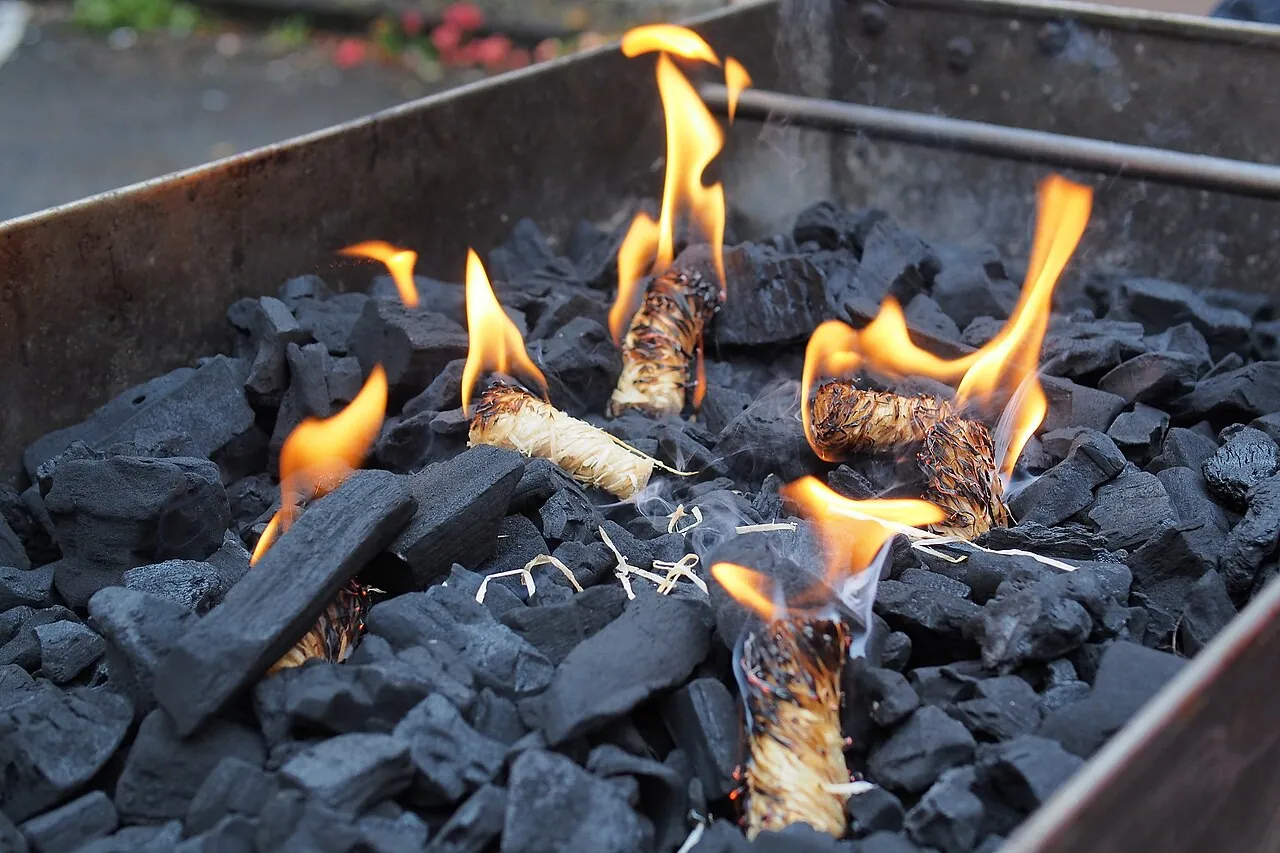

Lump charcoal: hotter, less uniform, less ash
Lump is essentially charred wood, so the pieces look like the branches they came from. That irregularity is the point and the drawback. A well-built lump fire can run very hot, which is useful for searing a steak or for getting a kettle up to pizza-like temperatures. It also tends to produce less ash than a comparable pile of briquettes, which can make long cooks and cleanup easier.
The trade-off is predictability. Small bits can fall through the grate or burn away quickly. Large chunks can leave cool gaps in the fire. A ten-pound bag of lump does not always equal ten pounds of usable, even fuel; there can be dust and tiny shards at the bottom. Quality varies more from brand to brand, and even from bag to bag, than with briquettes.
Lump also responds quickly to vents. Open the air and the fire can climb. Close it down and the fire can drop. That is a feature if you are paying attention and a problem if you walk away from a small kettle for too long.
Briquettes: steadier, longer, more alike from bag to bag
Briquettes are designed to be similar in size and to burn at a more even pace. That is why they are a common choice for weeknight grilling and for cooks where you want a known burn length, including a snake setup for ribs. A chimney of briquettes is easier to count and to repeat than a chimney of mixed lump.
The trade-offs sit in the ingredients and the ash. Many briquettes use a binder, and some use additives to help lighting or to produce a more uniform burn. If you want a bag with a short ingredient list, read the bag; “charcoal briquettes” as a category is not a single recipe. Briquettes generally leave more ash, which can pile up on a long cook and can clog vents if you never empty the bowl. They also can take a little longer to come up to a hard sear than a hot lump fire, depending on how you light them and how much you use.
A lid thermometer plus an instant-read for the food will tell you more than a brand slogan about whether your briquette fire is actually steady.
Lighting, lighting fluids, and the first ten minutes
A chimney starter works for both fuels and keeps lighter fluid out of the equation if you would rather not taste it. If you do use a starter fluid, use it only on unlit fuel, and give it time to burn off before the food goes on. Some briquettes are sold as “instant light” and already contain a lighting aid; those are convenient and can smell of the additive if you rush. Lump sometimes pops or throws a spark as pockets of wood gas ignite; keep your face back when you dump a chimney.
The first ten minutes after the fuel is lit are when people overcook the first side of a burger because the grate is not fully hot, or scorch a steak because they put it on while flames are still rolling over the coals. Let the fuel ash over, spread or bank it, and then cook. Two-zone setups work with either fuel.
Which fuel for which cook
Searing steaks, a quick round of burgers, or a cook where you want a sharp, hot zone is a good use of lump, especially if you are willing to tend the vents. A longer, calmer cook — chicken pieces on the indirect side, a rack of ribs on a snake, a Saturday of mixed food — is often easier with briquettes. Many people keep both and match the bag to the day, which is a more honest answer than declaring a winner.
Kamado-style cookers and some gravity charcoal smokers have their own fuel guidance. A tight ceramic cooker can run a long time on a modest load of lump; a cheap thin-metal pan may burn through lump faster than you expect. Follow the cooker maker’s notes, and do not assume a bag that worked in a kettle will behave the same in a different box.
Storage and cleanup
Keep charcoal dry. A bag that sat on a wet patio can be frustrating to light and can burn unevenly. A closed bin or a shelf in a dry shed is enough; you do not need a special cabinet. Empty ash when it is fully cold, especially after briquette cooks, so the next fire can breathe. A basic cleaning habit matters more to the life of the grill than the logo on the bag.
If you are buying a charcoal grill mainly because you like fire management, try a bag of each fuel on the same cooker and write down how it felt: time to temperature, how often you touched the vents, and how much ash you dumped. That short experiment will teach you more than a marketing line about “restaurant heat” or “all-natural flavor.”