
If you want to cook ribs, pork shoulder, or a similar long, lower-temperature piece of meat, two backyard tools come up constantly: a pellet grill with a hopper and a controller, and an offset smoker with a firebox on the side of a horizontal cook chamber. Both can produce excellent food. They ask for very different attention, fuel, and practice. A pellet grill is closer to a set-and-hold oven that burns wood pellets. An offset is closer to managing a small wood fire for hours.
This comparison is about that difference. It is not the same article as smokers vs grills, which is the broader “do I even want a smoker?” question, and it does not invent a flavor ranking or a “pellets cannot smoke” claim. For the meat itself, see how to smoke ribs and pork shoulder. For everyday grill fuel, see gas vs charcoal vs pellet.
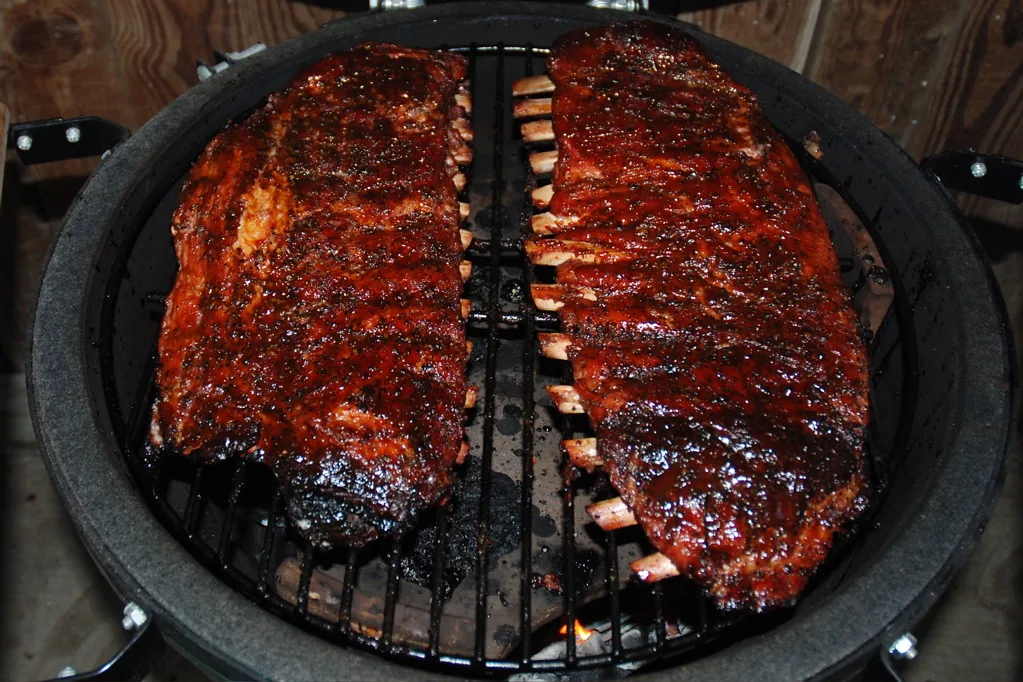
What a pellet grill is doing
A pellet grill uses an auger to feed compressed wood pellets into a fire pot, with a fan and a controller trying to hold the temperature you set. That is why many people can sleep, work, or sit down during a long cook in a way they would not on a small offset. Official temperature ranges vary: some models are mainly smokers and roasters; some claim a high-heat searing range. Read the official range for the exact model, not the category name.
Strengths:
- Repeatable set temperatures, often with a probe port or a Wi-Fi app (features differ; confirm the page).
- A relatively clean, moderate wood flavor from the pellets you choose.
- Less fire-tending skill to get through a first pork shoulder.
Trade-offs:
- It needs power. A patio outlet, and a plan if the power fails mid-cook, are part of the product.
- Mechanical parts (auger, igniter, fan) can fail, and hoppers must stay dry. Pellets that absorb rain become disappointment and, sometimes, a jammed auger.
- Direct, steak-level searing is model-dependent. If steaks are half your year, you may still want a kettle or a gas grill, or a model whose official high range you have actually checked.
- Flavor is real, and it is not always identical to a stick-burning offset. Whether that matters is a taste preference, not a moral test.
You still need a thermometer in the meat, a two-zone or indirect mindset when the official design allows hot spots, and ordinary food-safety habits. A controller holding a pit temperature does not finish the cook for you.
What an offset smoker is doing
An offset (sometimes a “stick burner,” in varying qualities) has a fire in a side box, with heat and smoke moving across the main chamber and out a stack. You manage fuel size, intake and stack dampers, and a fire that should burn cleanly rather than smolder. The cook can be excellent, and it will ask you to tend it.
Strengths:
- Direct control of a wood fire, and a style of smoke many people specifically want.
- A large cooking chamber on many traditional offsets, useful for several racks or a crowd.
- No hopper of pellets and, on a simple offset, fewer electronics (you still want good thermometers).
Trade-offs:
- A learning curve. Thin, cheap offsets can have harsh temperature swings and leaky doors; a well-built, heavier cooker is a different product than a toy-grade box with the same silhouette.
- Time and attention. You will add fuel, adjust vents, and live with weather. A windy, cold day is a different cook than a still afternoon.
- Storage and space: offsets are long, and they still need clearance and a safe ember plan. See grill safety.
- Startup and shutdown are slower than a gas grill, and often slower than a pellet grill’s official automatic ignition.
An offset is a hobby tool in the best sense: rewarding if you wanted that hobby, tiring if you only wanted ribs three times a year.
A kettle is still a third option
A charcoal kettle with a two-zone or snake-style fire can smoke a smaller amount of food without a new machine. It will not match a large offset’s capacity, and it will ask for practice, but it is a reasonable way to learn low-and-slow before you buy a dedicated cooker.
If you already like the kettle and only occasionally want a long cook, master that path first. If you already know you want overnight cooks with less tending, the pellet path is usually the more honest match. If you already know you want to burn splits and tend a fire, shop a serious offset, not the lightest box in the aisle.
How to choose without romanticizing either
- Count how often you will actually run a four-to-twelve-hour cook, and whether you will be home to tend a fire.
- Look at patio space, a dry place for pellets or splits, and a power outlet if you lean pellet.
- Read official temperature ranges, hopper or firebox size, and warranty on the exact model.
- Budget thermometers, a cover, and fuel storage, not only the cooker.
- Do not buy an offset you will be afraid to use, or a pellet grill you will resent because you wanted a stick fire.
Both tools are “real” smokers when they are used for long, indirect cooks with wood as the flavor source. The better one is the one whose maintenance and attention match your weekends. For broader cooker shopping, Best Grills of 2026 is a researched shortlist of currently sold grills and pellet options; confirm whether a given model is a true set-and-hold pellet cooker or a grill with a smoke feature in the name only.